
Types of Scaffolding Systems
Scaffolding gives construction teams a safe and practical way to work at height, but not every project needs the same type of system. From traditional tube-and-coupler structures to modern modular scaffolding, the right choice depends on the building shape, working height, load requirements, site conditions, and how often the scaffold needs to be moved or changed.
Key Takeaways
- Ringlock scaffolding is a flexible modular system suited to complex structures, high-rise construction, industrial facilities, bridges, and projects with changing layouts.
- Cuplock scaffolding offers strong and stable connections and works well for heavy-duty construction, shoring, formwork support, and civil engineering.
- Kwikstage scaffolding is known for simple assembly and is widely used for residential construction, commercial buildings, maintenance, and general access work.
What Are Scaffolding Systems?
Scaffolding is a temporary structure that provides elevated working platforms, access routes, and support for construction and maintenance activities. Depending on the project, scaffolding may be used for brickwork, painting, plastering, façade installation, repairs, industrial maintenance, formwork support, or access to difficult areas.
There are many scaffolding types because construction sites vary considerably. A simple façade renovation may need a straightforward frame scaffold, while a refinery, bridge, or high-rise building may require a more adaptable modular system. Ground conditions, available working space, expected loads, building geometry, and the required working height all influence the selection.
Among modern system scaffolding options, Ringlock, Cuplock, and Kwikstage are three widely recognized modular systems. They share the idea of standardized components and predefined connection points, allowing scaffold structures to be assembled into repeatable bays rather than relying entirely on individual tube-and-coupler connections.
Ringlock Scaffolding System
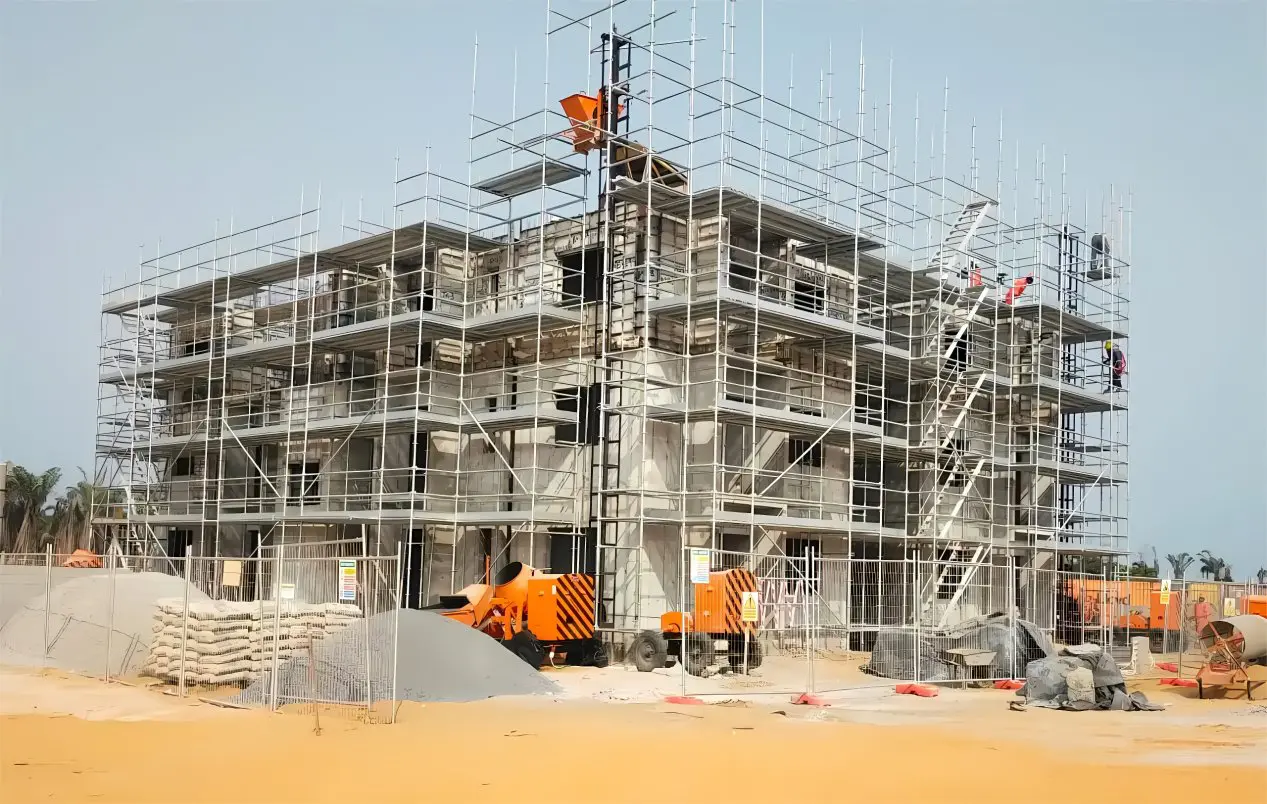
Ringlock scaffolding, also known as rosette scaffolding, uses vertical standards fitted with circular rosettes at regular intervals. Ledgers, transoms, braces, and other components connect to these rosettes, giving the system multiple connection directions.
One of Ringlock’s biggest advantages is its ability to adapt to different shapes. Straight façades are easy to accommodate, but the system can also be configured around curved structures, circular tanks, industrial equipment, bridges, and other geometrically demanding areas.
Common Uses of Ringlock Scaffolding
Ringlock is a strong option for:
High-rise building construction
Industrial plants and refineries
Chemical facilities
Shipyards and offshore projects
Bridges and infrastructure
Circular or irregular structures
Large temporary platforms and event structures
Heavy-duty access applications
Its multi-directional connection layout makes it particularly useful when a standard rectangular scaffold arrangement would be difficult to adapt. Ringlock can also be assembled and dismantled relatively quickly because fewer loose fittings are needed compared with traditional tube-and-coupler systems.
For projects where the scaffold has to follow complicated building geometry, Ringlock is often a practical choice.
Cuplock Scaffolding System
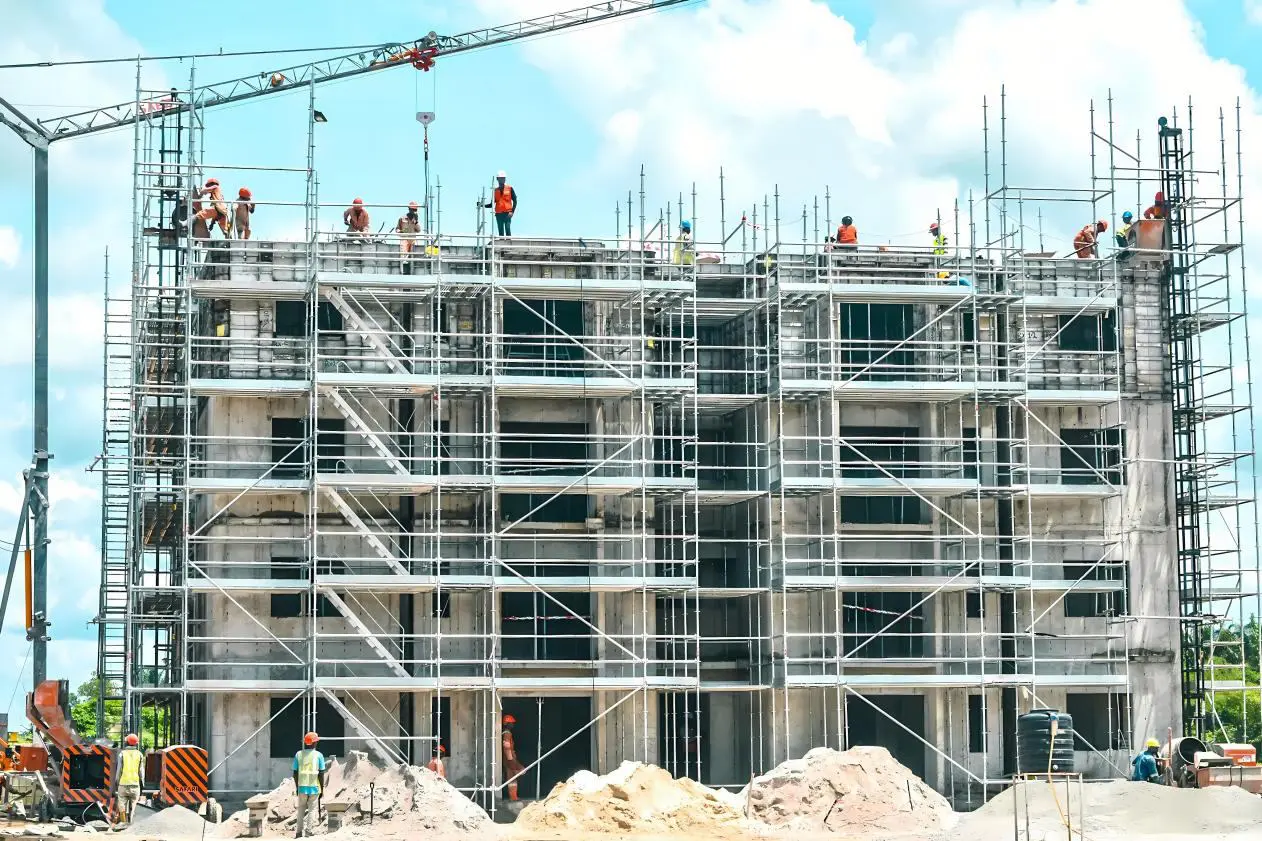
Cuplock scaffolding uses a cup-and-lock connection between the vertical standards and horizontal members. A typical connection consists of a fixed lower cup and a movable upper cup. Ledgers or transoms are positioned into the connection, and the upper cup secures them in place.
This straightforward mechanism gives Cuplock a reputation for stability and efficient assembly. Multiple horizontal members can be connected at a single node, making it suitable for creating regular scaffold bays and strong support structures.
Common Uses of Cuplock Scaffolding
Cuplock is commonly found in:
| Application | Typical Use |
| Building Construction | Provides access and working platforms for various building projects. |
| Heavy-Duty Scaffolding | Suitable for applications requiring high load capacity and robust support. |
| Formwork Support | Used to support formwork systems during concrete construction. |
| Shoring Applications | Provides temporary structural support during construction or renovation. |
| Building Renovation | Offers stable access and support for repair, restoration, and renovation work. |
| Façade Access | Provides working platforms for façade installation, maintenance, and repair. |
| Bridges and Tunnels | Used for access, support, and temporary works in infrastructure projects. |
| Chimneys and Water Towers | Provides safe access and working platforms for tall or difficult-to-reach structures. |
| General Civil Engineering Projects | Suitable for a wide range of temporary access, support, and construction applications. |
Compared with Ringlock, Cuplock generally offers less freedom for changing connection angles. In return, its relatively straightforward layout works well for projects where stable, repetitive scaffold bays are preferred. It is also widely used for support applications where substantial loads need to be carried by the scaffold structure.
Kwikstage Scaffolding System
Kwikstage scaffolding, sometimes called Quick Stage scaffolding, is a modular system designed around prefabricated connection points on vertical standards. Its distinctive V-shaped or triangular pressings allow ledgers and transoms to be connected quickly.
The system is particularly popular in Australia, New Zealand, the UK, and other markets where its standardized components are readily available. Its relatively simple design makes it convenient for projects with repetitive layouts and straightforward access requirements.
Common Uses of Kwikstage Scaffolding
Typical applications include:
Residential construction
Commercial building façades
Bricklaying
Painting and plastering
Building maintenance
Renovation projects
General construction access
Light to medium-duty work
Ringlock vs. Cuplock vs. Kwikstage
Although all three are modular scaffolding systems, they are not interchangeable in every situation.
| Scaffolding System | Main Strength | Typical Applications | Flexibility |
| Ringlock | Multi-directional connections | High-rise, industrial, bridges, complex structures | High |
| Cuplock | Stable and robust connections | Shoring, formwork, civil engineering, heavy-duty work | Medium |
| Kwikstage | Simple and fast assembly | Residential, commercial, maintenance | Medium |
Ringlock tends to stand out when the scaffold needs to follow complicated shapes or multiple working levels. Cuplock is a strong candidate for stable support and heavy-duty applications. Kwikstage makes sense for more conventional projects where quick assembly and straightforward layouts are priorities.
How to Choose the Right Scaffolding System
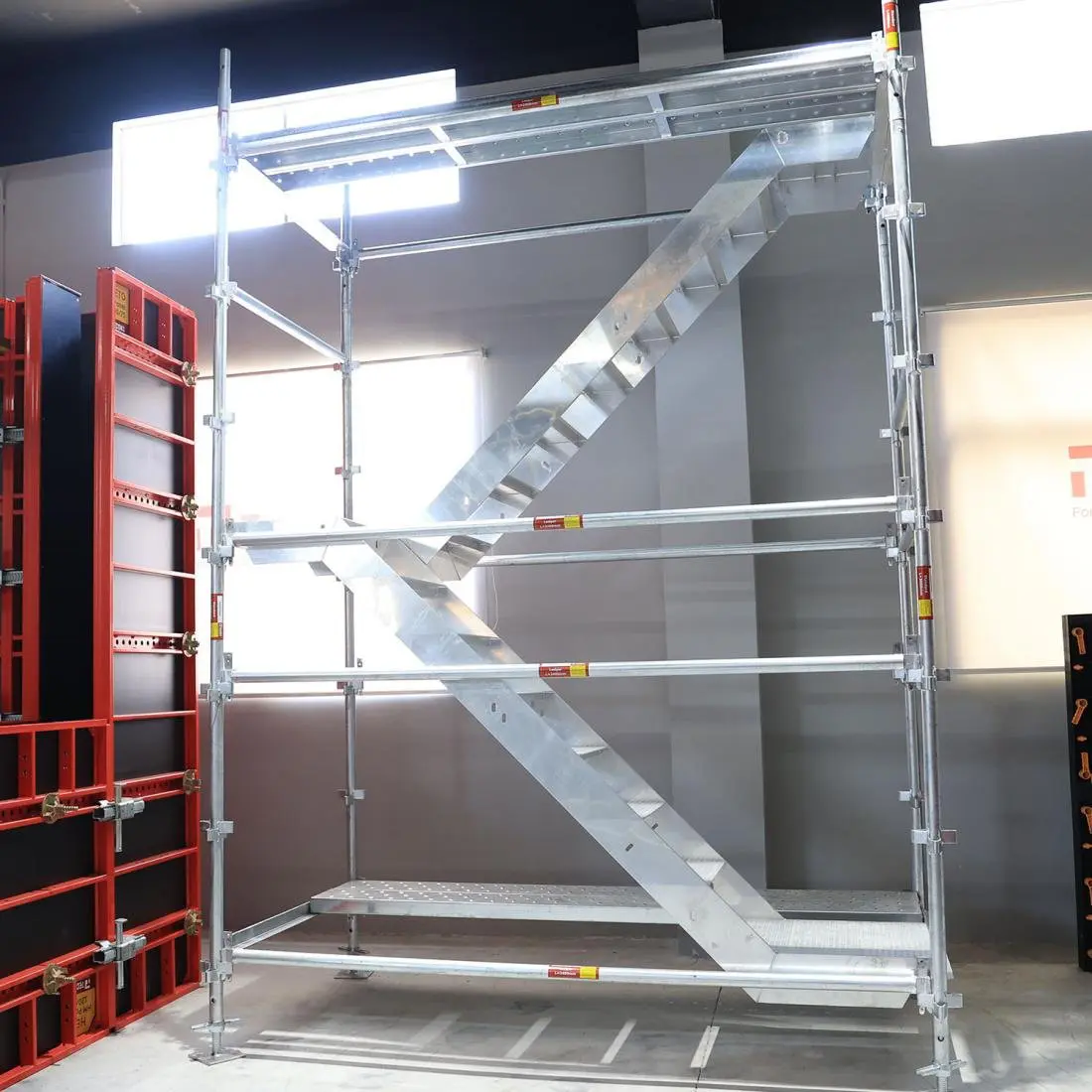
Choosing scaffolding starts with understanding the work that needs to be done. A few practical questions can make the decision much easier.
Consider the Building Shape
A simple rectangular façade can accommodate several types of scaffolding. Complex structures with curves, setbacks, tanks, columns, or irregular profiles may benefit from a more flexible modular system such as Ringlock.
Check Load Requirements
Think about what the scaffold will carry, including workers, tools, materials, platforms, and other temporary loads. Heavy-duty construction and formwork support may require a system designed for higher loads and a more rigid configuration.
Load capacity should always be confirmed through the manufacturer’s technical data and project-specific engineering requirements rather than estimated from the scaffold type alone.
Look at Available Ground Space
Ground conditions can change the best option considerably. A large open site may accommodate conventional ground-supported scaffolding, while a narrow site, busy road, uneven ground, or restricted area may require a different access arrangement, such as cantilever or suspended scaffolding.
Think About Working Height
As buildings become taller, wind exposure, access, tie-in requirements, material handling, and erection time become increasingly important. High-rise projects may combine modular scaffolding with specialized access systems rather than relying on a single scaffold type for every task.
Consider Assembly and Dismantling Time
For projects where scaffolding needs to be erected, altered, and removed repeatedly, connection design can have a noticeable effect on labor and productivity. Modular systems can simplify repetitive work by using standardized components and connection points.
Check Local Standards and Site Conditions
Weather, wind, corrosion, public access, nearby traffic, electrical hazards, and local regulations should all be considered during planning. Competent professionals should confirm the final scaffold configuration, including foundations, ties, bracing, loads, access, and fall protection.
It is also worth checking whether the required components, replacement parts, and trained workers are readily available in the project region. A technically suitable system may become less convenient if local crews have little experience with it.
Can Different Scaffolding Systems Be Combined?
A construction project may use more than one type of scaffolding, especially when different areas have different access requirements. For example, modular scaffolding may be used for the main structure while a mobile tower handles short-duration interior work.
However, individual components from different systems should not simply be mixed because they appear to fit. Compatibility, connection strength, dimensional tolerances, load capacity, and the manufacturer’s requirements all need to be confirmed by a competent person before components are combined.
Why Modular Scaffolding Is Popular
Modular scaffolding has become a common choice for modern construction because it offers a balance between flexibility, repeatability, and efficient assembly.
Standardized components are easier to organize, transport, store, and reuse across different projects. Fixed connection points also make it easier to create consistent scaffold bays and modify the structure when the work face changes.
For contractors working across different project types, this reusability can be particularly useful.
Conclusion
Ringlock, Cuplock, and Kwikstage each have their own strengths. Ringlock offers excellent flexibility for complex structures, Cuplock provides a stable solution for heavy-duty and support applications, while Kwikstage is a practical choice for many residential, commercial, and maintenance projects.
We make reliable scaffolding solutions that keep your projects moving, from simple access work to demanding construction sites.
Frequently Asked Questions
Ringlock is generally known for its high flexibility because its rosette connection points allow members to be arranged in multiple directions. This makes it suitable for curved, circular, irregular, and complex structures.
Neither system is universally better. Cuplock can be a good choice for regular layouts, heavy-duty support, and shoring, while Ringlock is often more suitable for complex geometries and projects requiring greater layout flexibility.
Kwikstage is commonly used for residential and commercial construction, façade work, painting, bricklaying, maintenance, and other applications with relatively straightforward layouts.
The answer depends on the building design, height, loads, wind conditions, façade geometry, access requirements, and local regulations. Ringlock and Cuplock can both be used on large and high-rise projects, while specialized climbing or suspended access systems may be appropriate for particular high-rise applications.
They should not be mixed simply because individual components appear compatible. The connection and structural performance need to be verified, and the manufacturer’s system requirements must permit such use.
Start with the project height, working area, expected loads, building shape, ground conditions, weather exposure, assembly requirements, local standards, component availability, and the experience of the installation team. These factors give a much clearer basis for choosing a suitable scaffolding system than price alone.
Plan Your Project With TECON
Share drawings or a material list and get a practical proposal for formwork and scaffolding.