
Saudi Arabia Reprioritizes Vision 2030 Projects: What It Means for the Formwork Industry in 2026
Saudi Arabia continues to be one of the world’s most active construction markets in 2026. As the country enters the third phase of Vision 2030, the government is shifting its focus from ambitious concepts to projects with stronger economic impact and faster returns.
According to recent reports, around 93% of Vision 2030 performance indicators have been achieved, exceeded, or are on track. Meanwhile, the Public Investment Fund (PIF) has announced that 80% of its 2026–2030 investments will be directed toward domestic sectors, including infrastructure, manufacturing, logistics, renewable energy, and urban development.
Mega Projects Are Being Reprioritized, Not Stopped
Recent discussions around NEOM and The Line have led some to believe Saudi Arabia is slowing down construction. In reality, the country is reallocating resources toward projects that can deliver economic value more quickly.
Demand is expected to grow across:
- Residential communities
- Commercial developments
- Logistics hubs
- Industrial facilities
- Tourism infrastructure
- Transport networks and public utilities
These sectors require efficient construction methods, shorter project cycles, and better cost control.

What This Means for the Formwork Industry
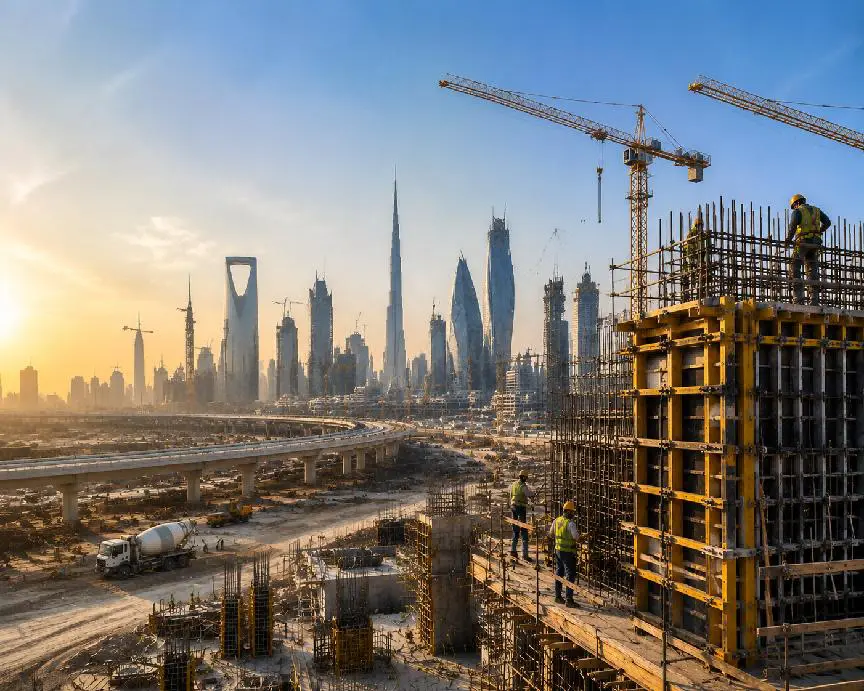
As contractors face tighter schedules and rising labor costs, demand for high-efficiency formwork systems is expected to increase.
Key solutions include:
- Steel frame wall formwork
- Adjustable column formwork
- Slab table formwork
- Heavy-duty shoring systems
- Climbing formwork for high-rise projects
Buyers are increasingly evaluating suppliers based on productivity, reusability, engineering support, and overall lifecycle cost rather than initial purchase price alone.

Jeddah Tower Signals Continued Construction Growth
While some developments are being adjusted, landmark projects continue to advance. Jeddah Tower has now surpassed the 100th floor and remains on track for completion around 2028, reinforcing Saudi Arabia’s commitment to large-scale construction.

Outlook for 2026
Saudi Arabia is not reducing construction activity; it is refining its priorities. For global formwork suppliers, this shift creates new opportunities in practical, high-volume projects that demand reliable, cost-effective, and reusable formwork solutions.
As Vision 2030 moves into its next phase, Saudi Arabia is expected to remain a key growth market for the global formwork industry.