

Beyond Skyscrapers: How Automated Climbing Systems are Transforming Modern Infrastructure
Automated and self-climbing systems (ACS) are no longer exclusive to massive supertall skyscrapers or standard high-rise cores. Today, progressive contractors worldwide are deploying this smart technology across a broader spectrum of complex infrastructure projects—from slender bridge pylons (such as cable-stayed bridge pylons) and elevated highway piers to municipal water treatment facilities and energy hubs.
The accelerated adoption of self-climbing formwork and automated scaffolding is driven by three main job-site challenges: severe shortages of skilled labor, increasingly strict safety regulations, and the high rental and operating costs of heavy tower cranes.
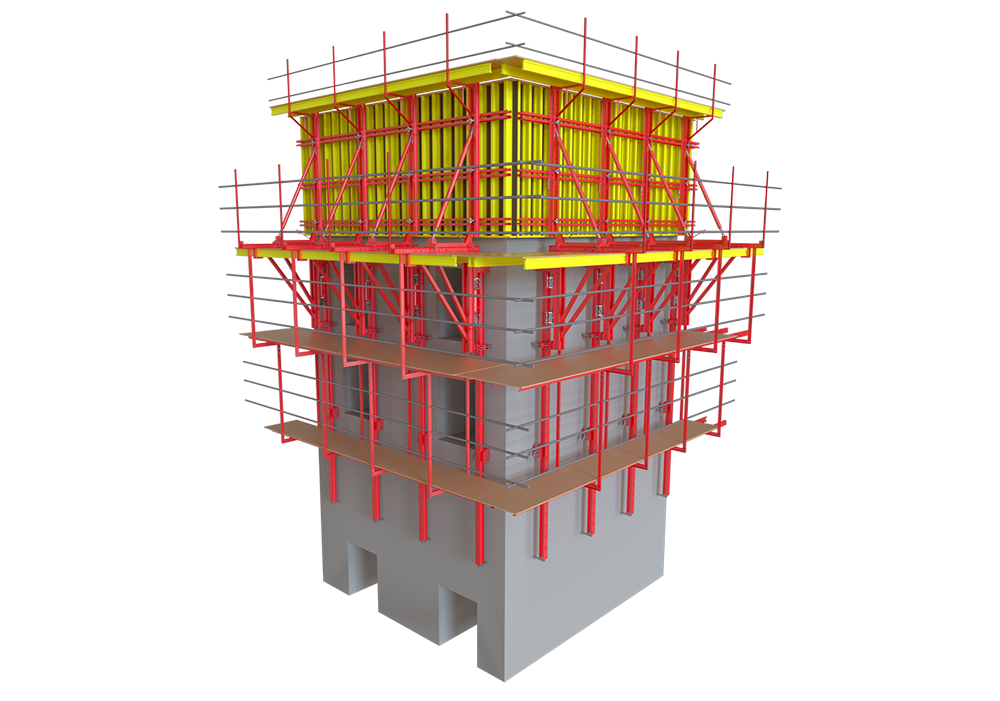
TECON Self-Climbing Formwork TSC50 / TSC100
Freedom from Crane Dependency & Faster Cycles
In traditional concrete construction, teams rely heavily on tower cranes to lift heavy formwork panels section by section. On congested infrastructure sites, crane availability is severely limited and frequently disrupted by high winds or adverse weather.

Hydraulic self-climbing systems solve this major bottleneck. Powered by integrated hydraulic cylinders, the entire formwork assembly and multi-level working platform climb smoothly and independently to the next pouring level. By eliminating reliance on crane availability, contractors can consistently shorten cycle times and boost overall construction speed by 20% to 30%.
A Safer, Enclosed Working Environment
Safety is a crucial driver behind the industry shift. Working at high elevations—especially on exposed infrastructure like bridge towers or water towers—presents severe risks from high-altitude winds and fall hazards.

Modern self-climbing formwork incorporates fully enclosed peripheral protection screens and integrated safety platforms, creating a secure, weather-protected, ‘factory-like’ environment high above the ground. By automating the climbing sequence, workers are freed from high-risk manual rigging operations at height, significantly lowering site accident rates.
Smart Integration & Flexible Geometry for Bridge Pylons
As modern infrastructure designs become geometrically complex—featuring inclined legs, curved surfaces, and variable cross-sections common in bridge pylons—climbing systems are evolving to be lighter, highly modular, and easily reconfigurable.

Furthermore, digital technology is taking climbing efficiency to the next level. With the added support of smart sensors that track concrete curing and strength development in real time, contractors no longer need to rely on estimation or off-site lab testing. The system instantly indicates when the concrete has achieved sufficient strength for stripping and climbing, ensuring maximum safety while optimizing stripping times.

Combined with real-time IoT monitoring and modular engineering, automated climbing systems are set to become the standard for next-generation infrastructure projects worldwide.