
Formwork vs Falsework
Concrete construction relies on temporary structures that support, shape, and stabilize works until the permanent structure can stand on its own. Among these temporary systems, formwork and falsework are often mentioned together, which can lead to confusion.
Although they are closely connected in many projects, they serve different purposes and operate in different ways across scaffolding and structural construction systems.
Key Takeaways
- Formwork shapes and contains fresh concrete until it hardens
- Falsework supports formwork and structural loads during construction
- Both systems are temporary but perform different roles in safety and stability
- They are often used together in bridges, slabs, beams, and high-rise structures
- Proper design and installation reduce construction risks and improve accuracy
Understanding Formwork
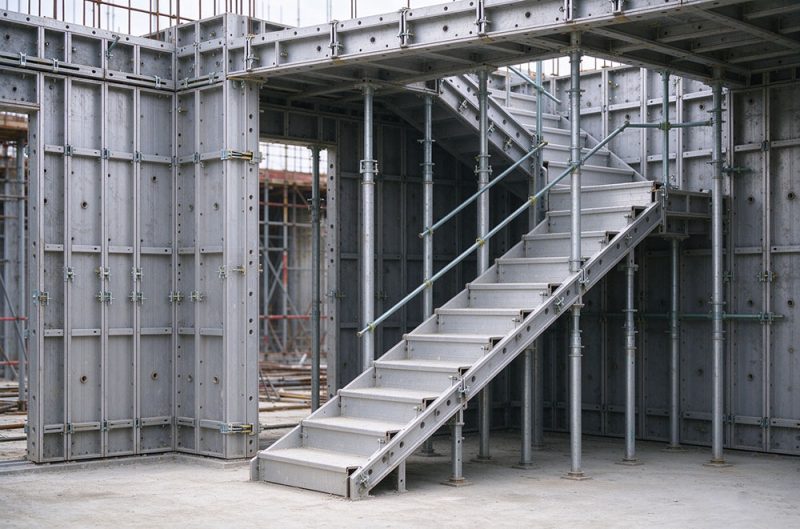
Formwork refers to the temporary mould used to hold freshly poured concrete in place until it gains enough strength to support itself. It defines the shape, surface finish, and alignment of structural elements such as walls, columns, slabs, and beams.
In practice, formwork acts like a container. Once concrete is poured, it prevents leakage and maintains the intended geometry until curing is complete.
| Category | Key Points |
| Main Functions of Formwork | Shapes concrete into required structural form; maintains alignment and dimensional accuracy; supports concrete weight during curing; influences surface finish quality |
| Common Formwork Materials | Timber formwork for small or complex shapes; steel formwork for durability and reuse; aluminum formwork for repetitive building projects; plastic and modular systems for speed and flexibility |
| Where Formwork is Used | Widely used in reinforced concrete projects such as residential buildings, tunnels, retaining walls, and bridge decks |
Understanding Falsework
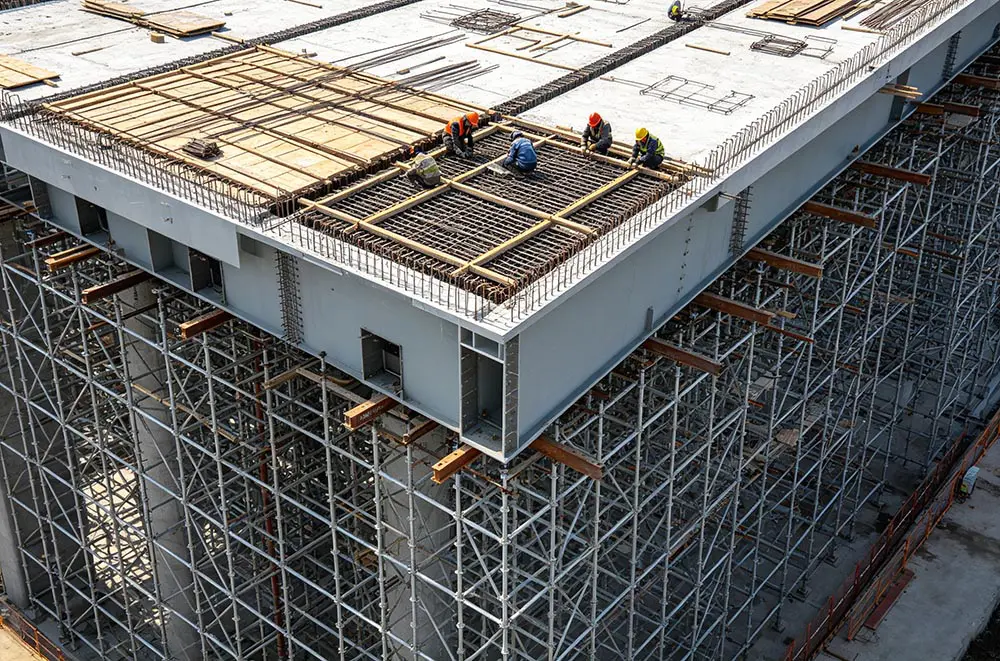
Falsework refers to the temporary supporting structure that holds formwork and freshly placed concrete in position. It is designed to carry loads from the formwork system, reinforcement, wet concrete, workers, and equipment until the structure becomes self-supporting.
Unlike formwork, falsework is primarily about structural support rather than shaping.
| Category | Key Points |
| Main Functions of Falsework | Supports formwork systems during construction; transfers loads safely to the ground or permanent structure; maintains stability during concrete placement; prevents deformation or collapse of temporary works |
| Common Falsework Systems | Scaffolding frames and tube-and-coupler systems; engineered steel shoring towers; adjustable props and shores; modular falsework systems for large spans |
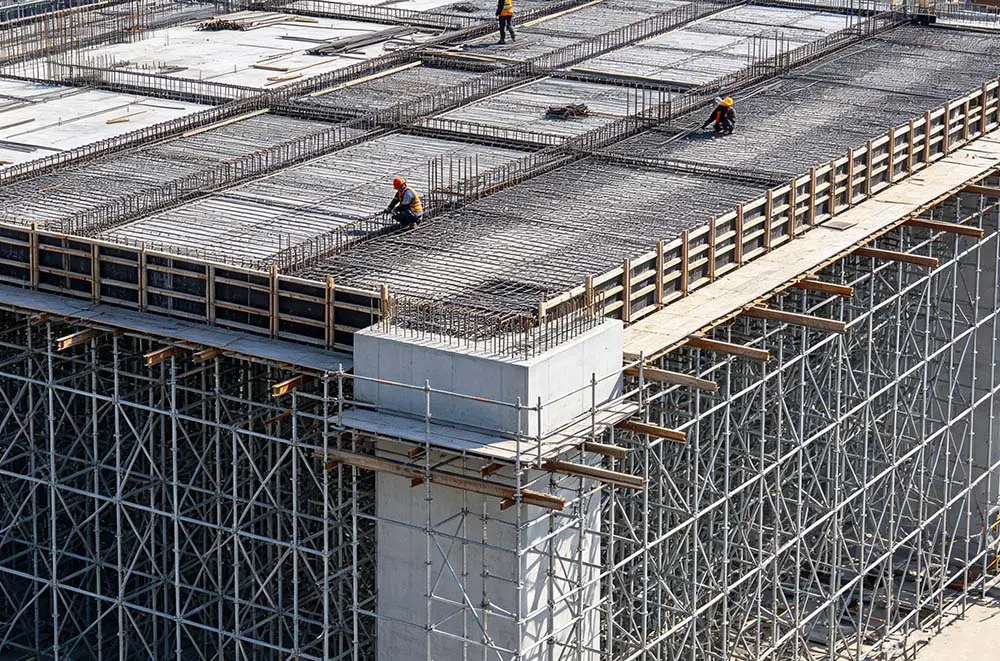
| Where Falsework is Used | Used in large-scale construction such as bridges, elevated slabs, viaducts, and heavy beam systems where significant loads require engineered temporary support |
Key Differences Between Formwork and Falsework
Although they are often installed together, their roles are not interchangeable. Understanding their differences helps clarify how construction systems are structured.
| Aspect | Formwork | Falsework |
| Function | Responsible for shaping concrete into the required structural form | Supports the formwork system and the loads it carries |
| Load Handling | Carries the direct pressure of fresh wet concrete | Carries the overall load of formwork, concrete weight, and working loads |
| Design Focus | Focuses on geometry, surface finish, and dimensional accuracy | Focuses on load-bearing capacity, stability, and safety |
| Duration of Use | Removed once concrete sets and gains sufficient strength | May remain longer, especially in large spans during curing |
| Dependency Relationship | Can be used without falsework in small-scale applications | Cannot function without formwork in concrete casting scenarios |
How Formwork and Falsework Work Together
In most real construction projects, these two systems operate as a single integrated setup.
For example, in bridge deck construction, falsework is first installed to provide the main support structure beneath the deck area. Formwork is then placed on top of the falsework to create the mold for the concrete.
Reinforcement is positioned within the formwork before concrete is poured into the system. The falsework continues to support the full structure throughout the curing process until the concrete gains sufficient strength.
This layered approach ensures stability throughout the construction cycle.
Safety and Engineering Considerations
Temporary works are often subject to high loads and changing conditions, which makes proper design and installation essential.
Load calculations
During load calculations, engineers consider the weight of wet concrete, construction equipment loads, worker movement and impact loads, as well as dynamic effects that occur during pouring.
Stability requirements
Falsework must be designed to resist vertical loads, lateral forces, wind loads in exposed environments, and uneven settlement caused by ground conditions.
Inspection and maintenance
Regular inspections are required during concrete pouring, the curing period, and the removal phase. Even small issues such as misalignment or ground settlement can affect the overall stability of the system if they are not detected and corrected early.
Common risks
Common risks in falsework systems include improper bracing, overloading during concrete placement, weak ground support, and incorrect assembly of modular components. These issues can lead to instability, misalignment, or even structural failure if not properly controlled.
Careful design, correct installation, and ongoing supervision are essential to maintain safety during construction.
Modern Trends in Formwork and Falsework Systems
Construction methods continue to evolve, and temporary works systems are becoming more efficient and engineered.
| Topic | Description |
| Modular systems | Prefabricated modular formwork and falsework systems reduce setup time and improve accuracy. |
| Aluminum systems | Lightweight aluminum systems are widely used in repetitive residential construction due to faster installation and high reuse efficiency. |
| BIM integration | Digital modelling helps engineers plan temporary works more accurately, reducing on-site errors and improving coordination. |
| Increased safety standards | Many regions now require formal design documentation and engineering approval for falsework systems before construction begins. |
Practical Applications in Construction
- High-rise buildings
Formwork systems are used for floors, walls, and cores, while falsework supports slab construction during curing. - Bridges and infrastructure
Falsework plays a major role in supporting long-span decks and beams, with formwork shaping the concrete structure above. - Industrial projects
Heavy-duty falsework systems support large concrete pours for tanks, foundations, and platforms.
Conclusion
Formwork and falsework are closely connected but serve distinct roles in concrete construction. One defines shape, while the other ensures stability and support.
When properly designed and installed together, they create a controlled environment that allows concrete structures to form safely and accurately across a wide range of construction projects.
We build reliable formwork and falsework solutions that keep your concrete projects safe, stable, and on track. Reach out to us and let’s make your next build stronger together.
FAQ
1. What is the main difference between formwork and falsework?
Formwork shapes the concrete, while falsework supports the formwork and structural loads during construction.
2. Can formwork be used without falsework?
In small or low-load applications, formwork may be used alone, but most structural projects require falsework for safety and stability.
3. Is falsework part of scaffolding?
Falsework often uses scaffolding components, but it is specifically engineered to support structural loads, not just access or working platforms.
4. When is falsework removed?
Falsework is removed after the concrete reaches sufficient strength to support itself, as determined by engineering requirements.
5. Why is falsework design important?
Proper design ensures load distribution, prevents collapse, and maintains safety during concrete placement and curing.
6. What materials are used in falsework systems?
Common materials include steel frames, aluminum systems, and engineered modular components designed for high load capacity.