
PVC Formwork Construction Process and Precautions
PVC Formwork Construction Technology
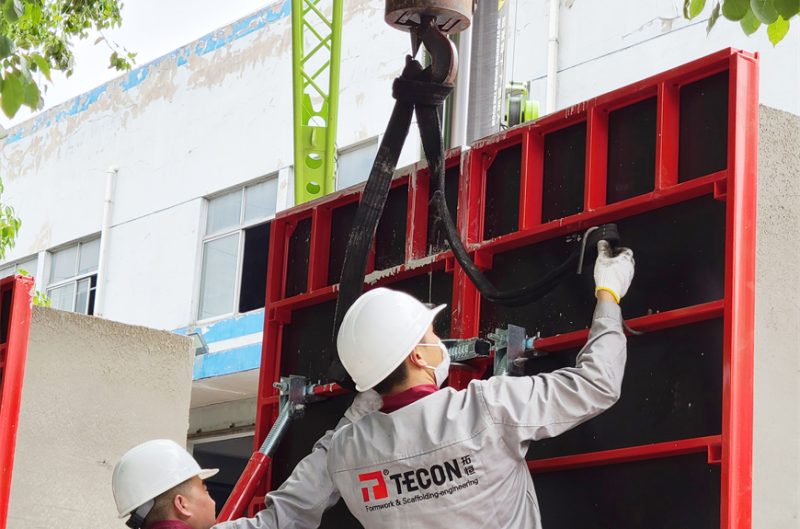
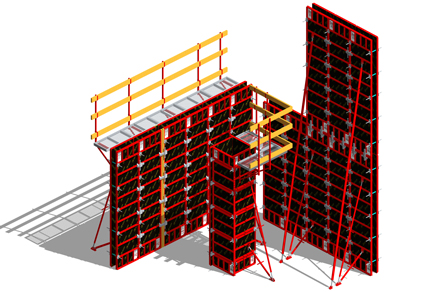
First, workers should be organized to familiarize themselves with the drawings and review the content for column, beam, and slab variations and sample details as per the drawings; then, based on conditions such as the engineering structure form, load size, type of foundation soil, construction equipment, and material supply, design the template and its support, and prepare the template construction plan; after assembling and forming the template, it should be numbered and stacked, and during installation, it should be laid according to the numbering. It is recommended to use 15mm thick plastic template panels for the top plate, and 15mm or 17mm thick panels for the shear walls, with vertical supports similar to wooden templates.
PVC Formwork Construction Precautions
The PVC formwork construction method is basically similar to that of traditional wooden plywood templates. However, due to the inherent characteristics of PVC materials, such as high strength, large thermal expansion coefficient, and water and corrosion resistance, the following points should be noted during construction:
Reasonable Board Layout Before Construction
Although PVC formworks can be cut, their high strength makes cutting more difficult than wooden plywood. Additionally, the cost of individual PVC formworks is relatively high, so arbitrary cutting is not recommended. The problem of templates in irregular areas can be solved by optimizing the board layout and using a mix of PVC formworks and plywood.
There are two methods for handling irregular areas:
- Manufacturer Customization: Calculate the size and number of irregular templates and have them mass-produced by the PVC formwork manufacturer.
- Partial Replacement: Use easily cut materials like plywood of the same thickness for supplementary splicing.
Reserve Expansion Joints
The thermal expansion coefficient of PVC formworks is slightly larger than that of steel and wooden templates. Therefore, appropriate expansion joints should be reserved during construction according to temperature changes to prevent template deformation caused by temperature differences.
- When laying PVC formworks in the morning or evening, it is recommended to reserve an approximately 1mm expansion joint (adjustable according to the temperature difference of the day) and use transparent tape to seal the gap.
- When laying at noon, since the temperature is relatively high and the PVC formwork has already expanded due to the heat, there is no need to reserve an expansion joint.
- Verticality and level deviations in some wall and column PVC formwork constructions are often caused by the lack of reserved expansion joints, leading to expansion and deformation of the templates, which must be particularly noted.
Avoid Nailing or Drilling Within 10mm of the Panel Edge
When nailing or drilling on a PVC formwork, ensure to keep a distance of at least 10mm from the panel edge to prevent cracking or damage to the edges of the template, which can affect construction quality and the reuse rate of the templates.
Avoid Long-Term High-Temperature Contact During Welding
PVC formworks are fire-resistant and flame retardant and can tolerate short-term exposure to open flames and welding slag. However, prolonged high-temperature welding can still damage the template surface, so during long-term welding, protective padding should be laid below the PVC formwork to prevent heat damage to the template.
Template Removal and Cleaning
After removing the PVC formwork, simple cleaning should be performed in a timely manner to ensure its reusability. Cleaning points are as follows:
- General Cleaning: Use a scraper and a small broom to remove concrete residues.
- Joint Cleaning: Since the joints usually undergo two concrete pourings, resulting in residual floating slurry, special attention is needed during cleaning. If the floating slurry is hard to remove, a soft-bristle polishing machine can be used to gently grind it, and then the PVC formwork can continue to be used.
In this blog