
What Are Plastic Construction Formwork?
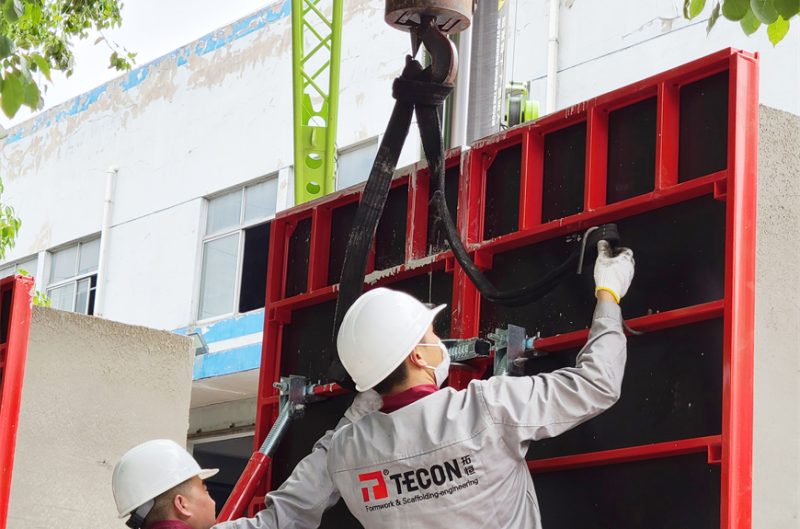
Plastic construction formwork is an energy-saving and environmentally friendly product. It is a new generation product following wooden formwork, combined steel formwork, bamboo-wood glued formwork, and all-steel large formwork. It can completely replace traditional steel and wooden formworks, being both energy-efficient and environmentally friendly with low amortization costs. This article will introduce you to this new type of construction formwork, the plastic construction formwork.
What is plastic formwork for construction?
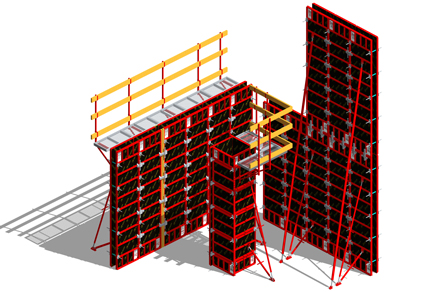
Plastic construction formwork is a composite material extruded through high temperatures of 200℃ based on the digestion and absorption of advanced European equipment manufacturing technology and processing experience, adhering to advanced product and process technology. The turnover times of plastic construction formwork can exceed 30 times and it can be recycled and reused. It has a wide temperature adaptation range and strong specification adaptability, and it can be sawed, drilled, and is easy to use. The surface flatness and smoothness of the formwork exceed the technical requirements of the existing fair-faced concrete formwork. It has functions such as flame retardant, corrosion resistance, water resistance, and chemical resistance. It also has good mechanical properties and electrical insulation properties. It can meet the requirements of various building formworks such as rectangular, square, L-shaped, and U-shaped.
Types of plastic construction formworks
Product types: Plastic-steel formwork, plastic-steel square timber, plastic-steel internal and external corner forms, plastic-steel cylindrical formwork, plastic-steel bridge formwork, and other special-shaped formworks.
According to material: Polyvinyl Chloride (PVC), Polypropylene (PP), Polyethylene (PE), Polycarbonate (PC), Acrylonitrile Butadiene Styrene (ABS), High-Density Polyethylene (HDPE), etc.
According to appearance: Solid board, hollow board, buckle groove board, modular assembly board, plastic square timber, plastic internal and external corners.
Advantages of plastic construction formwork
Plastic construction formwork is environmentally friendly and energy-saving, economical through recycling, and has waterproof and corrosion-resistant properties, making it a new favorite in the construction industry. The eight advantages are:
- Flat and smooth: Plastic construction formworks are tightly joined and smooth, and after removing the formwork, the surface flatness and smoothness of the concrete structure exceed the technical requirements of existing fair-faced formworks, eliminating the need for secondary plastering, saving labor and materials.
- Lightweight and easy to install: Lightweight with strong process adaptability, can be sawed, planed, drilled, nailed, and can be freely assembled into any geometric shape to meet the needs of various shapes of building formworks.
- Easy to remove: Concrete does not stick to the board surface, no release agent is needed, the formwork is easy to remove and clean.
- Stable and weather-resistant: High mechanical strength, does not shrink, swell, crack, or deform under temperatures from -20℃ to +60℃, dimensionally stable, alkali-resistant, corrosion-resistant, flame retardant, waterproof, rodent and insect-proof.
- Favorable for maintenance: Plastic construction formwork does not absorb water, requires no special maintenance or storage.
- Strong variability: Types, shapes, and specifications can be customized according to construction engineering requirements.
- Cost reduction: High turnover times, flat forms up to 30 times, column and beam forms up to 40 times, resulting in low usage cost.
- Energy saving and environmental protection: Edge pieces and old formworks can all be recycled as reusable plastic formwork, with zero waste emissions.
Currently, plastic construction formwork is mainly used as slab formwork. When laying steel bars, the high temperature of the welding slag during steel bar connection can scorch the plastic construction formwork, affecting the surface quality of the formed concrete. Therefore, flame retardants can be appropriately added to polypropylene to enhance the flame retardancy of plastic construction formwork. Additionally, protective measures can be taken during welding operations, such as giving welders an asbestos cloth to lay flat under the welding point for flat formworks or placing a small wooden board next to the welding point for vertical formworks, to solve the problem of plastic construction formwork being scorched by welding.
In this blog