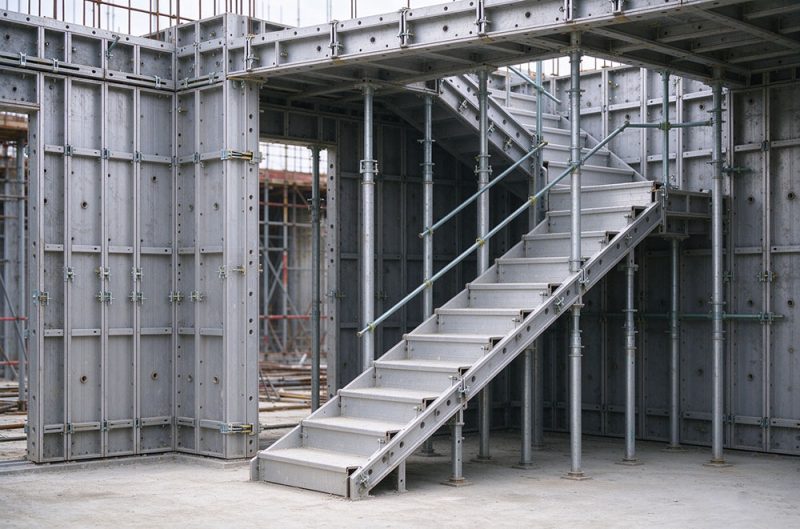

Concrete Formwork Maintenance: Best Practices for Longer Service Life
Concrete formwork is a significant investment for contractors who reuse the same systems across multiple projects. Regular maintenance helps keep panels, frames, and accessories in good condition and extends their service life.
Poor cleaning, handling, or storage can damage form surfaces and structural components. Over time, this reduces reuse cycles, affects concrete finish quality, and increases repair or replacement costs.
A consistent maintenance routine helps prevent these issues. Proper cleaning, correct use of release agents, routine inspection, timely repairs, and proper storage all contribute to better performance and longer service life.
This guide outlines practical maintenance practices contractors can apply between pours and projects to protect equipment and improve overall formwork efficiency.
Step 1: Clean Formwork After Each Use
Cleaning formwork promptly after stripping is one of the simplest ways to maintain surface quality and extend its service life. Concrete residue left on the form face can harden over time, making later removal more difficult and potentially leaving marks or uneven areas on the next concrete surface.
Avoid aggressive scraping or impact methods that may scratch, dent, or remove protective coatings. The appropriate cleaning method should always match the formwork material and the manufacturer’s recommendations.
When to Clean Formwork
Whenever practical, clean panels soon after stripping, before any remaining concrete has fully hardened. Early cleaning usually requires less force and reduces the risk of damaging the form face.
Avoid aggressive scraping or impact methods that may scratch, dent, or remove protective coatings. The appropriate cleaning method should always match the formwork material and the manufacturer’s recommendations.
Cleaning Different Formwork Materials
Steel Formwork: Remove concrete residue with suitable scrapers, brushes, pressure washing, or approved cleaning products. After cleaning, allow the panels to dry properly and inspect exposed steel surfaces for signs of corrosion.
Aluminum Formwork: Use cleaning methods and products compatible with aluminum. Avoid highly acidic or alkaline chemicals unless specifically approved, as unsuitable cleaners may attack the surface and contribute to corrosion.
Plywood Formwork: Use plastic or other non-damaging scrapers and brushes to remove residue without scratching the overlay. Pay particular attention to panel edges and damaged areas, where moisture can penetrate the plywood and shorten its service life.

Step 2: Apply Form Release Agent Correctly
Form release agents create a separating layer between the form face and fresh concrete, making stripping easier while helping protect both the formwork and the finished concrete surface.
Why Release Agent Application Matters
When correctly selected and applied, a release agent reduces concrete adhesion to the form face, simplifies formwork removal, and helps maintain a more consistent concrete finish. It can also reduce the force required during stripping, limiting unnecessary wear on reusable panels.
Apply a thin, uniform layer using suitable spraying or rolling equipment, following the product manufacturer’s recommended coverage rate. Avoid puddles and excessive buildup, particularly around corners, joints, and horizontal surfaces.
If the treated formwork is exposed to heavy rain or remains unused for an extended period, inspect the surface before concrete placement and reapply the product only where necessary.
Apply a Thin, Even Coat
More release agent does not necessarily provide better results. Excessive application can leave stains, discoloration, or other surface defects and may interfere with coatings or finishes applied to the concrete later.
Apply a thin, uniform layer using suitable spraying or rolling equipment, following the product manufacturer’s recommended coverage rate. Avoid puddles and excessive buildup, particularly around corners, joints, and horizontal surfaces.
If the treated formwork is exposed to heavy rain or remains unused for an extended period, inspect the surface before concrete placement and reapply the product only where necessary.
Step 3: Inspect Formwork Regularly
Repeated concrete pressure, handling, lifting, assembly, and dismantling can gradually wear or damage formwork components. Routine inspections help identify problems before the system is used again.
 Request a Quote
What to Check
Inspect panels and supporting components for deformation, cracks, corrosion, damaged welds, loose connections, and excessive wear.
Different materials may show different signs of deterioration:
Steel panels and frames: Check for bending, damaged welds, corrosion, and distorted connection points.
Aluminum formwork: Look for dents, deformation, cracks, and damaged edges or connection areas.
Plywood panels: Check for delamination, swelling, worn overlays, damaged corners, and exposed or deteriorated edges.
Accessories: Inspect ties, pins, wedges, clamps, bolts, and other connections for cracks, deformation, damaged threads, or excessive wear.
Components that are damaged should be assessed before reuse. Any part that can no longer perform its intended structural or connection function safely should be repaired according to an approved procedure or removed from service.
 Request a Quote
Step 4: Store Formwork Properly
Proper storage protects formwork between pours and during longer periods of inactivity. Moisture, standing water, direct ground contact, and prolonged weather exposure can accelerate corrosion, swelling, coating deterioration, and other forms of damage.
Keep panels and accessories off the ground using suitable supports or dunnage, and store them on a stable, well-drained surface. Stack panels securely to prevent distortion, slipping, or accidental damage.
When outdoor storage is unavoidable, protect the formwork from prolonged exposure to rain, snow, direct sunlight, and standing moisture. Protective covers may be used where appropriate, but sufficient ventilation should be maintained to prevent trapped condensation.
Before long-term storage, clean and inspect the system thoroughly. Steel components may require an appropriate corrosion-protection treatment, while plywood and other materials should be stored according to the manufacturer’s recommendations.
Step 5: Repair Damage and Replace Worn Components
Not every damaged formwork component needs to be replaced immediately. Minor surface damage, worn plywood areas, or limited corrosion may sometimes be repaired, provided the repair does not compromise structural performance or concrete finish requirements.
Repairs should follow the formwork manufacturer’s guidance and the project’s safety requirements. Structural components should not be modified, welded, straightened, or otherwise repaired without confirming that the proposed method is appropriate for the system.
Some damage, however, may indicate that a component has reached the end of its usable service life. Severely deformed frames, cracked structural members, damaged connections, extensively delaminated plywood, or components with significant corrosion should be carefully assessed and removed from service when they can no longer be used safely.
Keeping inspection and repair records can also help contractors track recurring damage, plan replacements, and understand how well a formwork system is performing over multiple reuse cycles.
Conclusion
Regular maintenance is essential to getting the most value from a reusable formwork system. Cleaning panels after each use, applying release agents correctly, inspecting components for damage, making timely repairs, and storing equipment properly can all help extend service life and maintain consistent performance from one pour to the next.
Good maintenance also makes it easier to identify worn or damaged components before they affect concrete quality or site operations. Over multiple reuse cycles, these routine practices can reduce unnecessary repairs and replacements while helping contractors protect their investment in formwork equipment.
TECON provides a comprehensive range of formwork and scaffolding solutions for building and civil engineering projects, including systems for walls, columns, beams, slabs, climbing applications, and other concrete structures. In addition to formwork equipment, TECON supports projects with engineering consultancy, technical planning, and on-site supervision to help contractors select and use systems suited to their construction requirements.
Ultimately, formwork performance depends not only on choosing the right system, but also on how well it is used and maintained throughout its service life. With proper care and a well-planned maintenance routine, contractors can achieve more reliable reuse, consistent concrete results, and better long-term value from their formwork investment.
Frequently Asked Questions