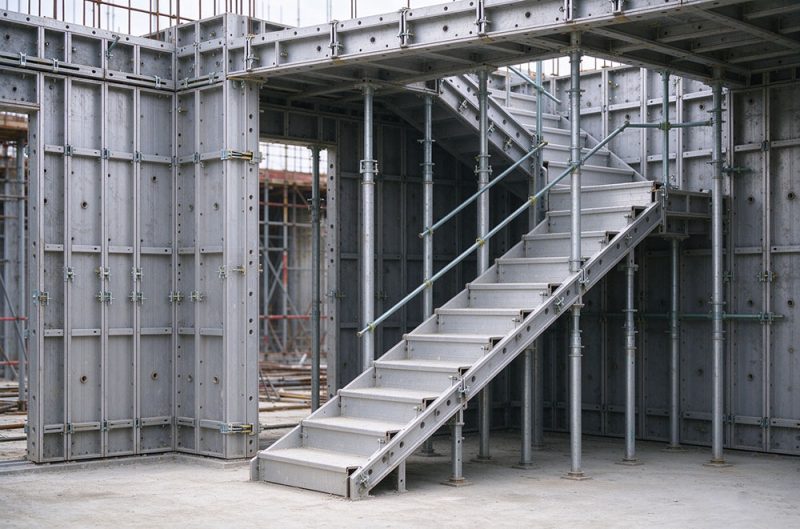

Types of Formwork for Concrete Structures
Concrete construction relies heavily on formwork systems to shape and support structures until the material gains enough strength. From residential buildings to large-scale infrastructure, the choice of formwork directly influences construction speed, accuracy, and overall project quality.
Understanding the different types of formwork helps builders select the right system for each application and improve efficiency on site.
Core Key Points
- Formwork acts as a temporary mold that shapes fresh concrete until it hardens
- Different materials such as timber, steel, aluminum, and plastic are used depending on project needs
- The choice of formwork affects cost, construction speed, and surface finish quality
- Some systems are reusable, while others are designed for single or limited use
- Modern formwork systems are increasingly focused on efficiency, safety, and sustainability
What Is Formwork in Concrete Construction?
Formwork refers to the temporary or permanent molds used to hold freshly poured concrete in place until it gains sufficient strength to support itself. It defines the shape, alignment, and surface quality of concrete structures such as columns, beams, slabs, walls, and foundations.
A well-designed formwork system does more than just shape concrete. It also ensures structural stability during curing, supports construction loads, and helps maintain dimensional accuracy. Poor formwork design can lead to defects such as bulging, misalignment, or surface irregularities.
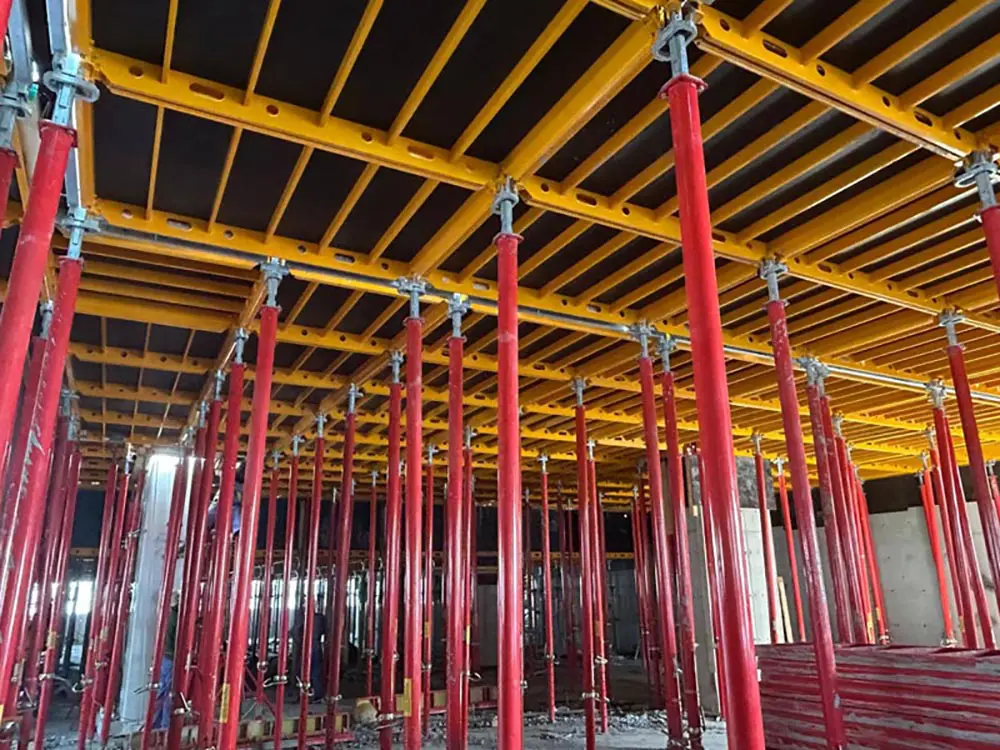
Main Types of Formworks for Concrete Structures
1. Timber Formwork
Timber formwork is one of the oldest and most widely used systems in construction. It is made from wood and plywood, often customized on-site to fit specific structural requirements.
This type of formwork is especially popular for small projects or structures with complex shapes. It is easy to handle, lightweight, and flexible in design. Carpenters can modify it quickly, making it suitable for irregular layouts.
However, timber formwork has limitations in durability. It absorbs moisture, which can cause deformation over time, and it is not ideal for large-scale repetitive use. Despite this, it remains a practical choice where customization is more important than reuse.
2. Plywood Formwork
Plywood formwork is often used alongside timber framing to improve surface finish and reduce imperfections. It provides a smoother concrete surface compared to plain timber boards.
This system is commonly used for walls, slabs, and beams where appearance matters. It is relatively affordable and can be reused several times if handled properly.
The main advantage of plywood formwork lies in its balance between cost and performance. However, it still requires proper support structures and careful maintenance to extend its lifespan.
3. Steel Formwork
Steel formwork is known for its strength, durability, and long service life. It is made from steel plates and is often used in large construction projects where repetitive use is required.
One of its key benefits is dimensional accuracy. Steel panels maintain their shape under heavy loads, producing smooth and consistent concrete finishes. It is also highly reusable, making it cost-effective over time for large-scale developments.
The downside is its weight and higher initial investment. Transport and handling require more effort compared to lighter materials. However, its long-term performance often offsets these challenges.
4. Aluminum Formwork
Aluminum formwork systems are widely used in modern high-rise construction due to their lightweight nature and efficiency. They are prefabricated and designed for rapid assembly and disassembly.
This system allows for fast construction cycles, especially in projects with repetitive floor layouts such as apartment buildings. Aluminum formwork also delivers high-quality finishes, often reducing the need for plastering.
While the initial cost is higher than traditional systems, its speed, reuse potential, and labor savings make it attractive for large residential developments.
5. Plastic Formwork
Plastic formwork is made from lightweight modular plastic panels. It is easy to handle, corrosion-resistant, and suitable for repetitive use in small to medium projects.
One of its main advantages is flexibility. It can be used for walls, columns, and slabs, and is easy to clean after use. It is also environmentally friendly in some cases due to recyclability.
However, plastic formwork is not ideal for heavy-load structures or complex engineering requirements. It performs best in simple and repetitive construction environments.
6. Fabric Formwork
Fabric formwork uses flexible textile materials to shape concrete, allowing for innovative architectural designs. It is often used in experimental or architectural projects where curved or organic shapes are required.
This system reduces material waste and enables creative structural forms that are difficult to achieve with rigid systems. However, it requires careful engineering and is not widely used in standard construction.
7. Permanent Formwork
Permanent formwork remains part of the structure after the concrete has cured. It is often made from materials such as insulated panels or precast elements.
This type improves construction speed and can enhance insulation or structural performance. It is commonly used in foundations, retaining walls, and specialized structural systems.
While it eliminates the need for removal, it becomes part of the final structure, so material selection is important.
Comparison of Formwork Types
Each formwork system serves different construction needs.
| Material / System Type | Characteristics |
| Timber and Plywood | Flexible and cost-effective, suitable for small-scale projects. |
| Steel and Aluminum | Preferred for large-scale and repetitive construction due to high durability and precision. |
| Plastic and Fabric Systems | Lightweight and innovative solutions for specialized applications. |
| Permanent Formwork | Provides long-term functional benefits in addition to structural support. |
Choosing the right system depends on factors such as project scale, budget, required finish quality, and construction speed. In many cases, a combination of different formwork types is used within a single project.
Factors to Consider When Choosing Formwork
Several practical considerations influence formwork selection:
- Project size and complexity
- Required surface finish
- Reusability and lifecycle cost
- Labor availability and construction speed
- Structural load requirements
- Environmental conditions on site
Balancing these factors helps ensure that the chosen system supports both efficiency and quality.
Future Trends in Formwork Systems
Modern construction is moving toward modular, reusable, and faster-installation systems. Aluminum and prefabricated formwork systems are becoming more common due to their efficiency and reduced labor demand.

Digital design tools and building information modeling are also improving formwork planning, reducing errors and optimizing material usage. Sustainability is another growing focus, with more attention on recyclable materials and reduced waste during construction.
We help you choose the right formwork for every concrete project and build stronger foundations with confidence. Explore our solutions with us and shape better construction outcomes together.
FAQ
1. What is the most commonly used formwork type?
Timber and plywood formwork are widely used in smaller projects due to their flexibility and low cost. For large-scale construction, steel and aluminum systems are more common.
2. Which formwork type is the most durable?
Steel formwork is generally the most durable and can be reused many times without losing its shape or strength.
3. Is aluminum formwork better than steel formwork?
Aluminum formwork is lighter and faster to install, making it ideal for high-rise buildings with repetitive layouts. Steel formwork is stronger and better suited for heavy-duty applications.
4. Can formwork affect concrete quality?
Yes, formwork directly affects surface finish, alignment, and structural accuracy. Poorly designed formwork can lead to defects in the final structure.
5. What is permanent formwork used for?
Permanent formwork remains in place after concrete hardens and is often used for insulation, reinforcement, or structural enhancement.